

How Poor Procurement Decisions Lead to Claims and Delays on Construction Projects (A practical perspective for projects in Nigeria and emerging markets.)
Project delays and contractual claims are often blamed on external factors such as price inflation, client changes, or unforeseen conditions. However, a significant number of disputes originate from something far more controllable: poor procurement decisions.
When procurement is reactive, unstructured, or poorly documented, it creates a chain reaction that affects cost, time, and contractual relationships.
At WeConstructHub, many procurement-related challenges observed across projects are not caused by lack of materials, but by how procurement decisions are made and managed.
1. Late Procurement and Programme Disruption
One of the most common procurement mistakes is ordering materials too late.
Late procurement leads to:
Missed delivery windows
Site downtime
Rushed purchases at higher prices
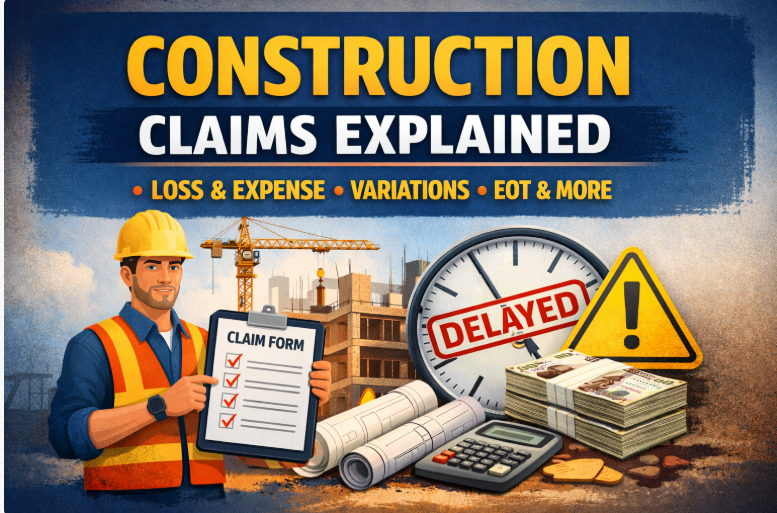
When activities cannot proceed as scheduled due to unavailable materials, project programmes slip. These delays often become the basis for extension of time (EOT) claims or disputes between contractors and clients.
2. Inconsistent Supplier Selection
Changing suppliers frequently without clear criteria introduces uncertainty.
Common consequences include:
Inconsistent material quality
Variable delivery timelines
Pricing disputes
When suppliers fail to deliver as expected, contractors struggle to prove responsibility due to weak procurement documentation.
Reliable procurement is built on supplier consistency, not constant price chasing.
3. Poor Documentation of Orders and Deliveries
Procurement decisions made verbally or through scattered messages are difficult to defend contractually.
Without proper records:
Quantity shortfalls are hard to prove
Delivery delays become disputed facts
Claims lack supporting evidence
Many claims fail not because they are invalid, but because they are unsupported by procurement records.
This is why structured order logs and delivery confirmations are critical.
4. Emergency Purchases and Cost Escalation
Reactive procurement often forces contractors into emergency purchases.
Emergency buying usually results in:
Higher material prices
Limited supplier choice
Unfavourable payment terms
These increased costs can lead to variation claims, which are frequently contested when there is no clear link between procurement timing and price escalation.
5. Weak Coordination Between Site and Procurement Teams
When site teams and procurement teams operate independently:
Materials arrive too early or too late
Storage issues arise
Programme alignment breaks down
This lack of coordination increases the risk of both delays and disputes, especially on fast-track projects.
6. How Better Procurement Reduces Claims and Delays
Contractors can significantly reduce procurement-related claims by:
Planning material orders in line with the programme
Using reliable and consistent suppliers
Keeping clear records of prices, orders, and deliveries
Verifying deliveries promptly
Centralizing procurement decisions
These practices improve transparency, accountability, and contractual defensibility.
At WeConstructHub, the marketplace and knowledge systems are designed around these principles—helping contractors move from reactive procurement to planned, documented, and reliable material sourcing.
Conclusion
Poor procurement decisions do not only increase costs—they directly contribute to delays, disputes, and failed claims.
By adopting structured procurement practices and prioritizing transparency, contractors can:
Protect project timelines
Reduce contractual disputes
Improve overall project performance
As construction projects become more complex, platforms like WeConstructHub play a critical role in supporting smarter procurement decisions that reduce risk and improve delivery outcomes.

















Comments
No comments yet..!
Write a Comment