
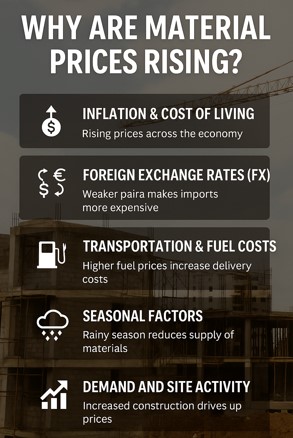
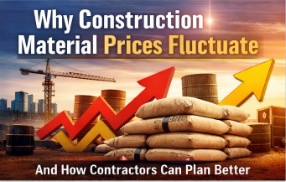
Why Are Material Prices Rising? 5 Market Forces You Should Know
🏗️ Introduction
Have you noticed that the price of cement, rods, blocks, and even sand keeps climbing—but you\\\\\\\\\\\\\\\'re not sure why?
You\'re not alone. Understanding the market forces behind rising construction material prices is essential for anyone in the industry—whether you\'re a contractor, quantity surveyor, client, or developer. In this post, we break down 5 key reasons why material prices keep going up and what you can do to stay ahead.
💸 1. Inflation & Cost of Living
Inflation affects every sector—including construction. When the general cost of goods and services rises, suppliers and manufacturers adjust their prices to maintain profitability. This impacts everything from the production of cement to the price of nails.
🔍 Example: A 10% rise in inflation may lead to a proportional increase in labor, logistics, and material input costs.
💱 2. Foreign Exchange Rates (FX)
Many raw materials and construction tools are imported. When the Naira weakens against the dollar, importers pay more—and those extra costs get passed on to you.
🔧 Iron rods and steel are particularly sensitive to forex rates, often imported or influenced by global steel prices.
🚚 3. Transportation & Fuel Costs
Fuel price increases immediately affect transportation. Since most building materials are heavy and require trucking across states, any hike in diesel or petrol prices leads to more expensive deliveries.
🚛 A tipper of granite or sharp sand from Ogun to Lagos, for instance, can jump in cost just because of higher diesel rates.
🌧️ 4. Seasonal Factors (Rainy Season)
During the rainy season, the availability of materials like sand and laterite drops due to waterlogging and flooding of borrow pits. Suppliers increase prices to match limited supply.
💡 This is why block prices tend to rise during rainy months—both due to sand scarcity and drying delays.
🏢 5. Demand and Site Activity
When construction activity increases—especially in booming areas—demand spikes. More demand + limited supply = higher prices. This is common during dry seasons or near election periods when projects rush to complete.
📈 Cities like Lagos, Abuja, and Port Harcourt tend to lead this kind of price hike during peak building seasons.
🔎 What Can You Do?
Plan ahead: Bulk-buy during off-seasons or when prices are low.
Use verified suppliers: Avoid middlemen who inflate prices.
Stay informed: Follow platforms like WeConstructHub for weekly price updates.
Consider local alternatives: When appropriate, explore locally sourced or recycled options.
📬 Stay Updated
Want to avoid guessing prices? Subscribe to our Material Price Alerts and get the latest updates sent to your inbox.






Comments
No comments yet..!
Write a Comment