

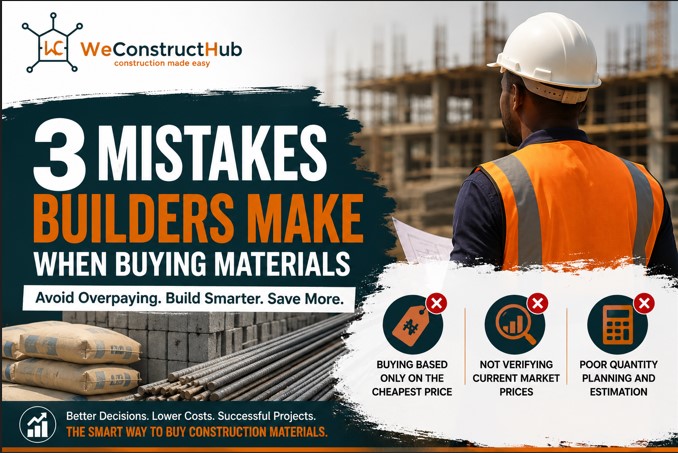
The Hidden Cost of Cheap Building Materials: Why the Lowest Price Can Become the Most Expensive Decision
When you\'re planning a construction project, whether it\'s building a home, renovating an office, or developing a commercial property, one question always comes up:
\"How can I reduce costs?\"
It\'s a valid question. Construction projects are expensive, and every naira counts. However, one of the biggest mistakes many homeowners, contractors, and developers make is assuming that buying the cheapest building materials automatically saves money.
In reality, cheap building materials often come with hidden costs that don\'t appear on the invoice but show up later through repairs, delays, safety issues, and even complete replacement.
At WeConstructHub, we\'ve seen countless projects where a small saving at the point of purchase resulted in significantly higher expenses months—or even weeks—later.
Let\'s explore why the cheapest option isn\'t always the smartest investment.
1. Cheap Materials Often Mean Lower Quality
Not all building materials are manufactured to the same standard.
Two products may look identical, yet differ significantly in:
Strength
Durability
Manufacturing process
Raw material quality
Compliance with industry standards
For example:
A low-quality reinforcement bar may contain impurities or have a smaller actual diameter than advertised.
A cheaper cement brand may not consistently achieve the expected compressive strength.
Inferior roofing sheets may fade, rust, or leak within a few years.
At first glance, these differences aren\'t always visible. But once construction begins, they become expensive problems.
2. Higher Maintenance Costs
Cheap materials usually deteriorate much faster.
Instead of lasting decades, they may require repairs every few years.
Examples include:
Paint peeling after one rainy season
Plumbing fittings leaking prematurely
Floor tiles cracking under normal use
Roofing sheets developing corrosion
Door locks failing within months
Every repair requires:
Labour
Replacement materials
Time
Potential disruption to occupants
Over ten years, maintenance costs can easily exceed the amount initially \"saved.\"
3. Increased Labour Costs
Poor-quality materials are often more difficult to work with.
Examples include:
Warped timber requiring adjustment
Broken blocks increasing wastage
Uneven tiles taking longer to install
Inferior electrical accessories requiring replacement during installation
When installers spend more time correcting defective materials, labour costs increase.
Remember:
Labour is one of the most expensive components of any construction project.
Saving ₦50,000 on materials but spending an extra ₦150,000 on labour isn\'t a bargain.
4. Material Wastage
Cheap products often have higher defect rates.
You may receive:
Broken tiles
Cracked blocks
Bent steel
Damaged plumbing fittings
Cement bags affected by moisture
This means purchasing additional materials that weren\'t originally budgeted.
Your \"cheap\" purchase quickly becomes expensive.
5. Project Delays
Construction works like a chain.
If one component fails, every other activity is affected.
Imagine ordering:
Poor-quality doors that don\'t fit.
Roofing sheets that arrive damaged.
Electrical cables that fail inspection.
Now the contractor must:
Stop work
Source replacements
Wait for new deliveries
Reinstall materials
Every delay costs money.
For commercial developments, delays can also mean lost rental income or postponed business operations.
6. Structural Risks
This is where the consequences become truly serious.
Substandard structural materials can compromise the safety of a building.
Examples include:
Low-quality reinforcement bars
Weak concrete blocks
Inferior cement
Counterfeit structural steel
These materials may contribute to:
Excessive cracking
Structural movement
Water penetration
Reduced load-bearing capacity
In severe cases, they can contribute to partial or total structural failure.
Construction should never compromise on materials that directly affect the integrity and safety of a building.
7. Safety Hazards
Poor-quality materials don\'t just affect buildings—they can endanger lives.
Examples include:
Faulty electrical cables causing fires
Weak scaffolding components leading to accidents
Poor plumbing fittings causing water damage
Inferior roofing materials detaching during storms
The cost of an accident can far exceed the savings made from purchasing cheaper products.
8. Reduced Property Value
Prospective buyers and tenants notice quality.
Poor finishing, deteriorating materials, and recurring defects reduce confidence in a property.
This often results in:
Lower property valuation
Longer selling periods
Reduced rental income
Increased negotiation from buyers
Quality construction is an investment that enhances long-term property value.
9. More Frequent Replacements
Quality materials are designed to perform over their expected lifespan.
Cheap alternatives often require replacement much sooner.
Consider the difference:
| Material | Cheap Option | Quality Option |
|---|---|---|
| Roofing Sheets | 5–8 years | 20–30 years |
| Paint | 2–3 years | 8–10 years |
| Plumbing Fixtures | 2–5 years | 15–20 years |
| Electrical Accessories | Frequent replacements | Long service life |
Replacing materials repeatedly means paying for:
New products
Labour
Demolition
Disposal
Reinstallation
10. Hidden Costs of Counterfeit Materials
One growing challenge in many construction markets is counterfeit products.
These products imitate well-known brands but fail to meet quality standards.
Counterfeit materials can include:
Cement
Electrical cables
Paint
Waterproofing products
Steel reinforcement
Adhesives
Without buying from trusted suppliers, it\'s easy to unknowingly purchase fake products.
The Psychology Behind \"Cheap\"
Many buyers focus only on the purchase price.
But construction professionals evaluate something different:
Life-cycle cost.
Life-cycle cost considers:
Purchase price
Installation cost
Maintenance
Repairs
Replacement
Energy efficiency
Service life
A product that costs 20% more initially but lasts three times longer is often the more economical choice.
How to Buy Smart Instead of Buying Cheap
Instead of asking:
\"What\'s the cheapest option?\"
Ask:
Is this product certified?
Does it meet relevant standards?
Who manufactured it?
Does the supplier have a good reputation?
Is there a warranty?
How long is the expected lifespan?
What do professionals recommend?
These questions help you make informed purchasing decisions that save money over the long term.
The WeConstructHub Approach
At WeConstructHub, we believe transparency leads to better construction decisions.
Our goal is not simply to help customers find the lowest price—it is to help them find the best value.
By comparing prices from multiple verified suppliers, providing market insights, and connecting buyers with trusted vendors, we help customers balance affordability with quality.
Construction is one of the biggest investments most people will ever make. Every material you choose contributes to the safety, durability, and value of that investment.
Final Thoughts
The cheapest material is rarely the cheapest decision.
A lower upfront price can lead to higher maintenance costs, increased labour, project delays, safety risks, and expensive replacements.
Instead of focusing solely on price, consider the total cost of ownership. Investing in quality materials from trusted suppliers protects your budget, your timeline, and the long-term performance of your building.
At WeConstructHub, we\'re committed to helping builders, contractors, developers, and homeowners make smarter procurement decisions. Because in construction, true savings come from buying wisely—not simply buying cheaply.






Comments
No comments yet..!
Write a Comment