
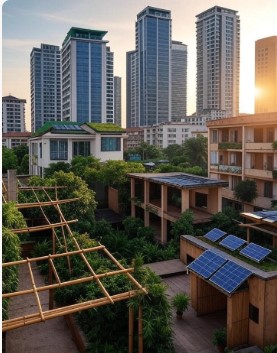
Top Architectural Trends Shaping Nigerian Construction in 2025
The Nigerian construction industry is evolving rapidly. From smart homes in Lagos to eco-resorts in Lekki, architecture is blending technology, sustainability, and culture like never before.
But what exactly is shaping the way we design and build in 2025? Let’s explore the top architectural trends driving Nigerian construction this year.
- Sustainable & Green Architecture With rising concerns about climate change and energy costs, architects are prioritizing eco-friendly designs.
Use of sustainable materials like bamboo, compressed earth blocks, and recycled steel.
Passive design principles—natural ventilation, daylighting, and rainwater harvesting.
Adoption of green building certifications like EDGE, LEED, and BREEAM in high-end projects.
Why it matters: It reduces environmental impact and lowers long-term operational costs.
- Smart Homes & Building Automation Technology is redefining how we live. In 2025, smart homes are no longer a luxury for only the elite—they’re becoming more mainstream.
Voice-controlled lighting, security, and HVAC systems.
Energy-efficient appliances and IoT-based monitoring.
Integration of solar power and backup battery systems.
Why it matters: Homeowners want convenience, security, and energy efficiency in one package.
- Blending Tradition with Modernity Architects are reimagining vernacular Nigerian designs with modern touches.
Courtyard-style homes redesigned with sleek finishes.
Traditional motifs and patterns incorporated into facades.
Use of local craftsmanship alongside modern construction techniques.
Why it matters: It preserves cultural identity while meeting modern lifestyle needs.
- Modular & Prefabricated Construction The demand for faster, cost-effective projects is driving prefabrication and modular construction.
Pre-made building components assembled on-site.
Reduces waste and speeds up construction timelines.
Already popular in affordable housing and temporary structures.
Why it matters: It solves housing shortages and keeps costs predictable.
- Mixed-Use & Flexible Spaces Urban areas like Lagos, Abuja, and Port Harcourt are seeing more mixed-use developments—where residential, commercial, and recreational spaces coexist.
Buildings with co-working hubs, shopping, and living spaces in one.
Flexible interiors that can adapt to changing needs.
Community-focused layouts that encourage social interaction.
Why it matters: Cities are getting denser, so space must serve multiple purposes.
- Resilient & Climate-Responsive Design As floods and heat waves become more frequent, resilient architecture is on the rise.
Elevated structures in flood-prone zones.
Materials designed for durability in harsh weather.
Green roofs and permeable pavements to manage stormwater.
Why it matters: It protects lives, property, and investments in a changing climate.
- Adaptive Reuse & Renovations Instead of tearing down old buildings, architects are repurposing existing structures.
Converting old warehouses into offices or event spaces.
Reviving colonial-era buildings with modern amenities.
Preserving heritage while adding new functionality.
Why it matters: It saves costs, reduces waste, and preserves history.
Final Thoughts 2025 is shaping up to be a transformative year for Nigerian architecture, driven by sustainability, technology, and cultural innovation. Whether it’s smart homes, green buildings, or hybrid traditional-modern designs, the future of construction is smarter, faster, and more climate-friendly.
At WeConstructHub, we’re at the forefront of this change—bringing you updated material prices, tutorials, and a marketplace for the tools you need to build in line with these trends.
Want to stay ahead in the construction industry? Subscribe to our newsletter and join the future of building!







Comments
No comments yet..!
Write a Comment